This is a conditional tactical analysis, not confirmation of a transfer. Using reporting on Rodri’s possible fit, Barcelona’s current structure and the roles of its midfielders, VerdictLab examines what his arrival could change on the pitch—and what it would not automatically solve.
- The immediate gain: a stable first pass
- Pedri could move closer to the decisive spaces
- Flick would gain two midfield structures
- The defensive improvement is real, but not magical
- The trade-offs: minutes, mobility and physical risk
The immediate gain: a stable first pass
Rodri’s clearest contribution would come before the spectacular moments. He gives centre-backs a calm central outlet, receives under pressure and can switch the direction of an attack without forcing the next pass. Against a high press, that could keep Barcelona from becoming too dependent on Pedri dropping beside the defenders. Against a low block, his positioning would help recycle possession while keeping enough protection behind the ball.
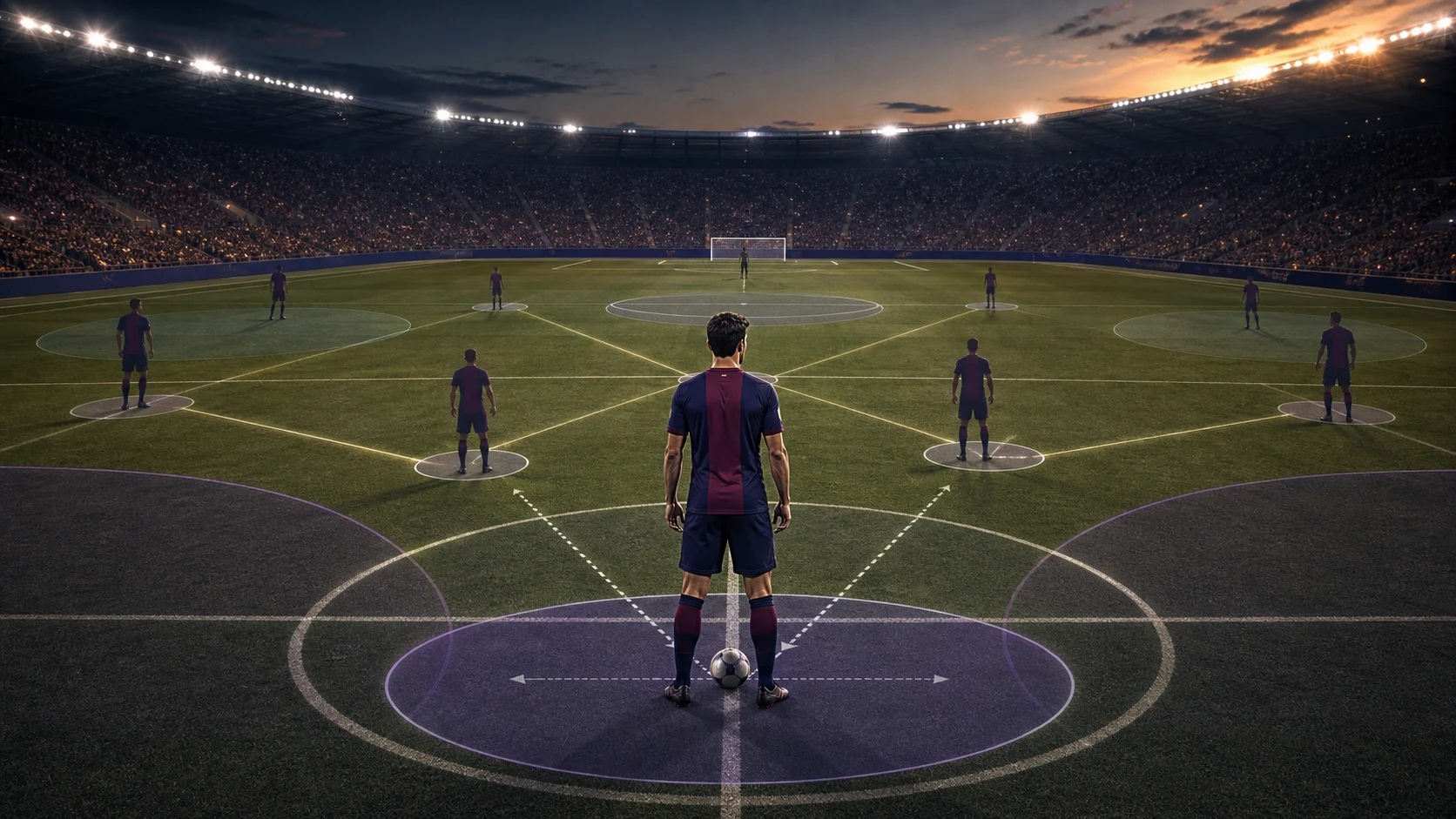
Pedri could move closer to the decisive spaces
Pedri is most valuable when he can scan, connect and receive between lines rather than spend every phase repairing the build-up. FIFA’s profile of his scanning highlights the intelligence behind those choices. With Rodri anchoring the first phase, Pedri could start higher, combine more often with Lamine Yamal and the attacking midfielder, and conserve energy for counter-pressing. The partnership is plausible, but spacing matters: both players naturally look for central influence and must avoid occupying the same passing lane.
Flick would gain two midfield structures
In a 4-3-3, Rodri could operate as the single pivot with Pedri and a more dynamic midfielder ahead. In Flick’s familiar 4-2-3-1, Rodri could share the base with De Jong or Pedri while Dani Olmo or Fermín plays between the lines. The first shape offers cleaner positional control; the second can improve ball progression against aggressive opponents. Rodri would not remove the need for intensity—he would give that intensity a more reliable platform.
The defensive improvement is real, but not magical
Barcelona’s high line leaves large spaces when the first press is broken. Rodri reads danger early, delays transitions and occupies the zone in front of the centre-backs better than a purely creative midfielder. That should reduce emergency defending, but one holding midfielder cannot repair poor pressure from the front or badly timed defensive steps. Barcelona would still need compact distances, coordinated full-backs and disciplined recovery runs.
The trade-offs: minutes, mobility and physical risk
Àlex Delmàs has raised the important squad-management question: a senior pivot could restrict minutes for Marc Bernal, Gavi and other developing midfielders. De Jong’s role would also need definition. Rodri’s recent physical history makes workload management part of the tactical plan, not a footnote. VerdictLab’s view is that the potential fit is elite, especially for control in major matches, but success would depend on rotation and role clarity rather than simply placing the best names together.
Rodri could make Barcelona more controllable without making every version of Barcelona more dangerous.
VerdictLab editorial note
Original sources
This VerdictLab report is an original summary and analysis based on the reporting below.
How this was created: VerdictLab selected and checked the cited reporting, prepared an original summary with AI assistance, and translated it for accessibility. We link to the original publishers and do not reproduce their articles.