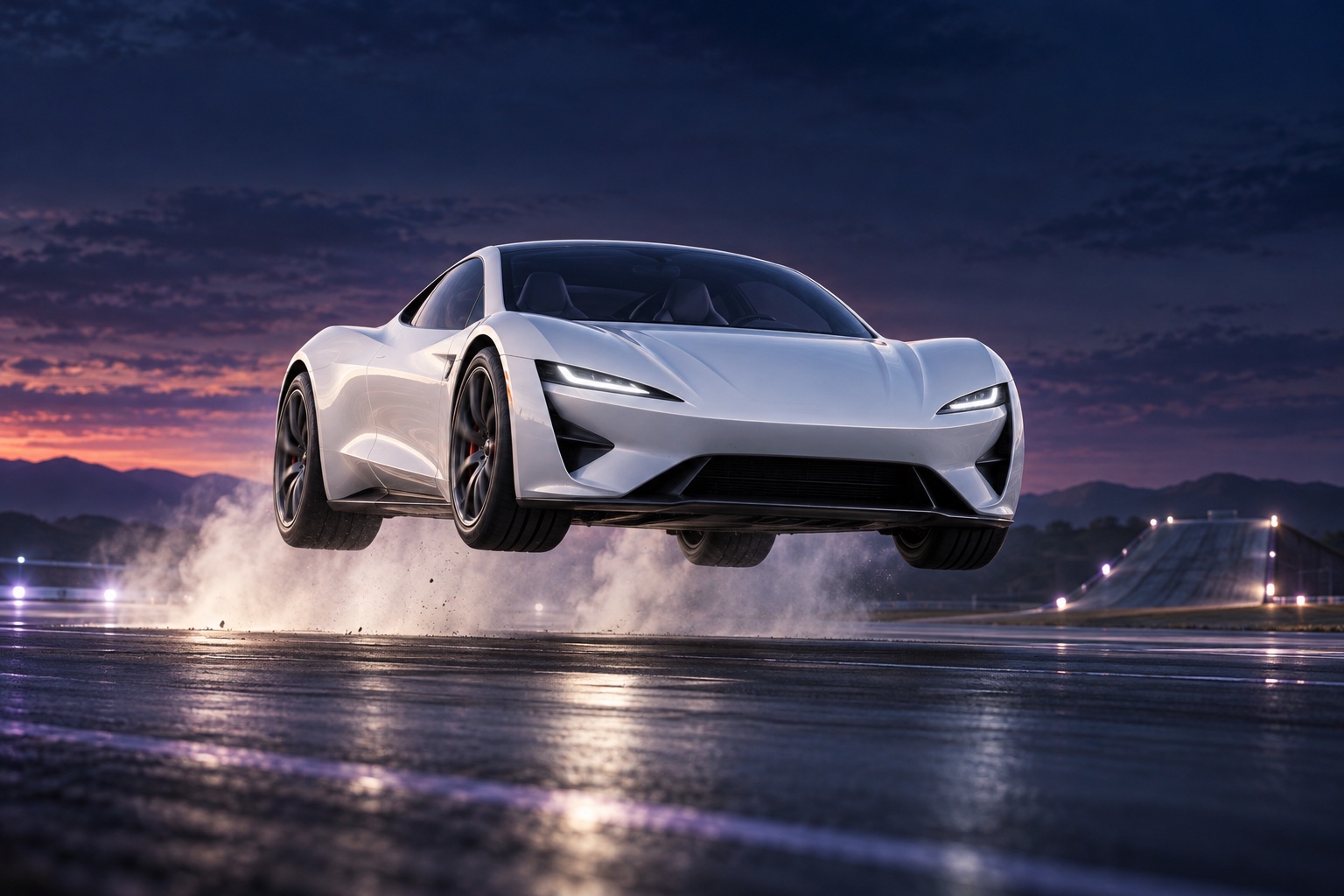
At a 15 October 2026 event in Texas, Tesla and Elon Musk presented a redesigned Roadster prototype that climbed a steep curved structure, went airborne, rotated and landed. The demonstration was striking. It was also a controlled prototype stunt, not the arrival of a certified car that can fly between destinations. We separate the observed event from Tesla's proposed production features, availability and unanswered safety questions.
- What happened at the Roadster reveal?
- How do the fan and thrusters work?
- Performance, Thrust and Rocket are different cars
- Does this count as a flying car?
- When could people buy one, and at what price?
- VerdictLab's take: what evidence matters next
What happened at the Roadster reveal?
Tesla staged the presentation at SpaceX's McGregor, Texas facility. Reports and the event replay show a prototype driving up a curved ramp, briefly leaving the surface, turning in the air and landing. A separate car was shown on stage. The demonstration establishes that this prototype performed a choreographed aerial maneuver under event conditions; it does not establish the durability or everyday capability of a production model.
How do the fan and thrusters work?
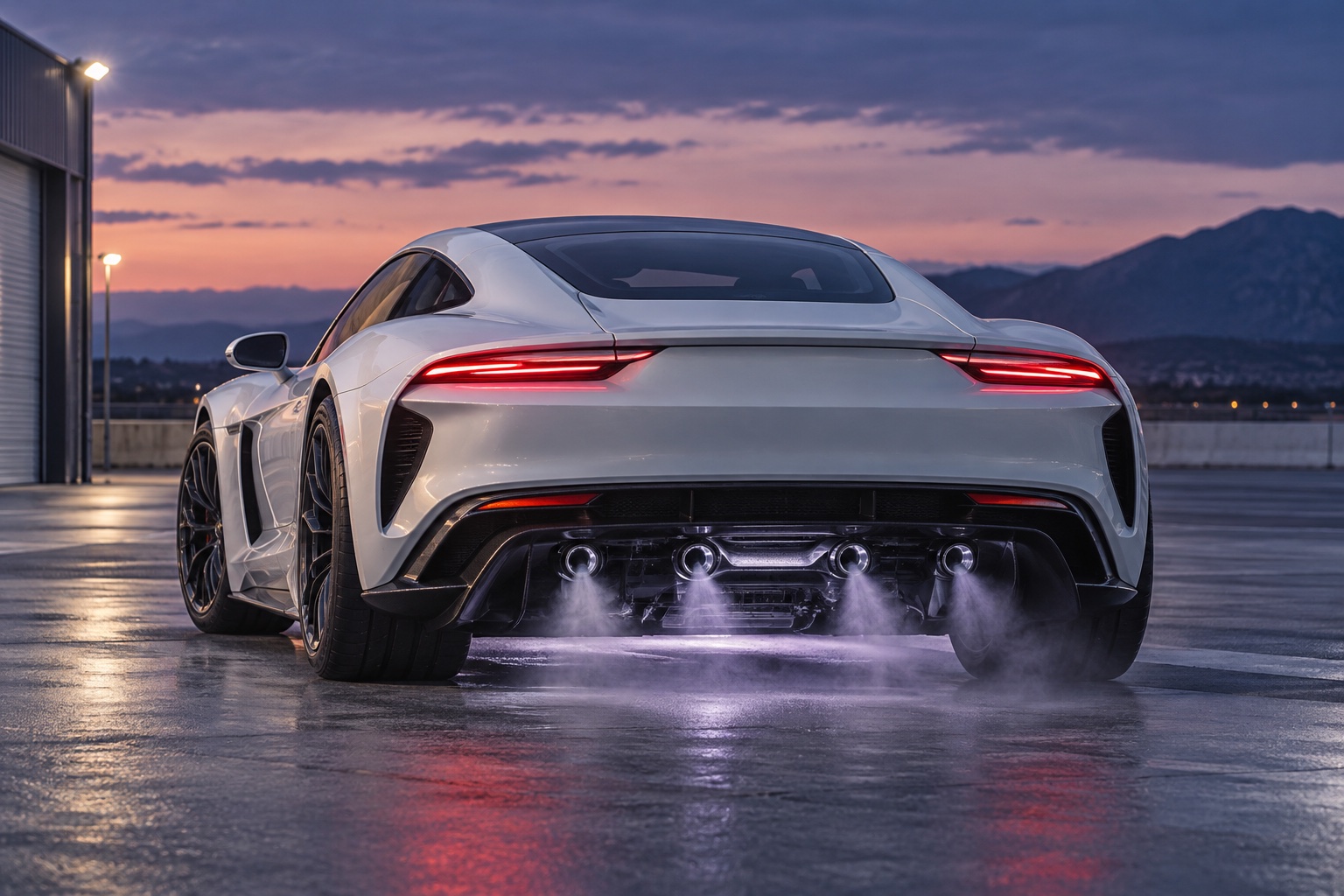
Tesla describes an underbody suction system intended to increase grip and compressed-air, or cold-gas, thrusters developed with SpaceX engineering input. The fan helps hold the car to the surface on the ramp; the thrusters supply force and control during the airborne portion. These are Tesla's descriptions of its prototype and planned configurations. Independent repeatable testing, energy-use data and a production engineering specification have not yet been published.
Performance, Thrust and Rocket are different cars
Tesla now describes three Roadster configurations. Performance is a two-seat road-focused model with active aerodynamics and the suction system. Thrust adds rear cold-gas thrusters and is pitched for track performance. Rocket is a one-seat, invitation-only configuration with a broader flight system; Tesla warns it may not be available in every region. The company's acceleration targets are claims about proposed variants, not independently verified figures for customer cars.
Does this count as a flying car?
In the literal sense, the demonstration vehicle was airborne. In the practical sense, it was a short, controlled stunt. Tesla has not shown point-to-point flight, normal takeoff and landing, passenger service or approvals to use such a system on public roads and in airspace. The relevant laws and permissions will differ by region. Calling every Roadster a flying car would also blur Tesla's own distinction between the road, track and Rocket configurations.
When could people buy one, and at what price?
Musk said Tesla aims to begin building the new Roadster in 2028. That is a target, not a confirmed customer delivery date, and the project has already missed earlier schedules. Tesla has opened reservations for some configurations, but a reservation payment is not the vehicle's final retail price. As of 16 October 2026, a complete production price list, delivery timetable and regional eligibility for Rocket remain unresolved.
VerdictLab's take: what evidence matters next
The reveal makes the engineering ambition tangible, but the purchase case depends on repeatable tests outside a staged course, pressure-system maintenance, fail-safe behavior, usable range, crash protection, road and aviation permissions, and a real production schedule. Anyone considering a reservation should read Tesla's current terms and treat performance figures and dates as company targets until customer vehicles and independent tests exist.
The prototype flew briefly; that is not the same as a road-legal, everyday flying car.
VerdictLab editorial note
Original sources
This VerdictLab report is an original summary and analysis based on the reporting below.
How this was created: VerdictLab selected and checked the cited reporting, prepared an original summary with AI assistance, and translated it for accessibility. We link to the original publishers and do not reproduce their articles.